
Bold and built to last
Traditional tattoos in Phoenix
American traditional and neo-traditional tattoos with strong outlines, limited palettes, and subjects designed to read across a room.
Tattoo work from the studio.
American traditional, and neo-traditional beside it
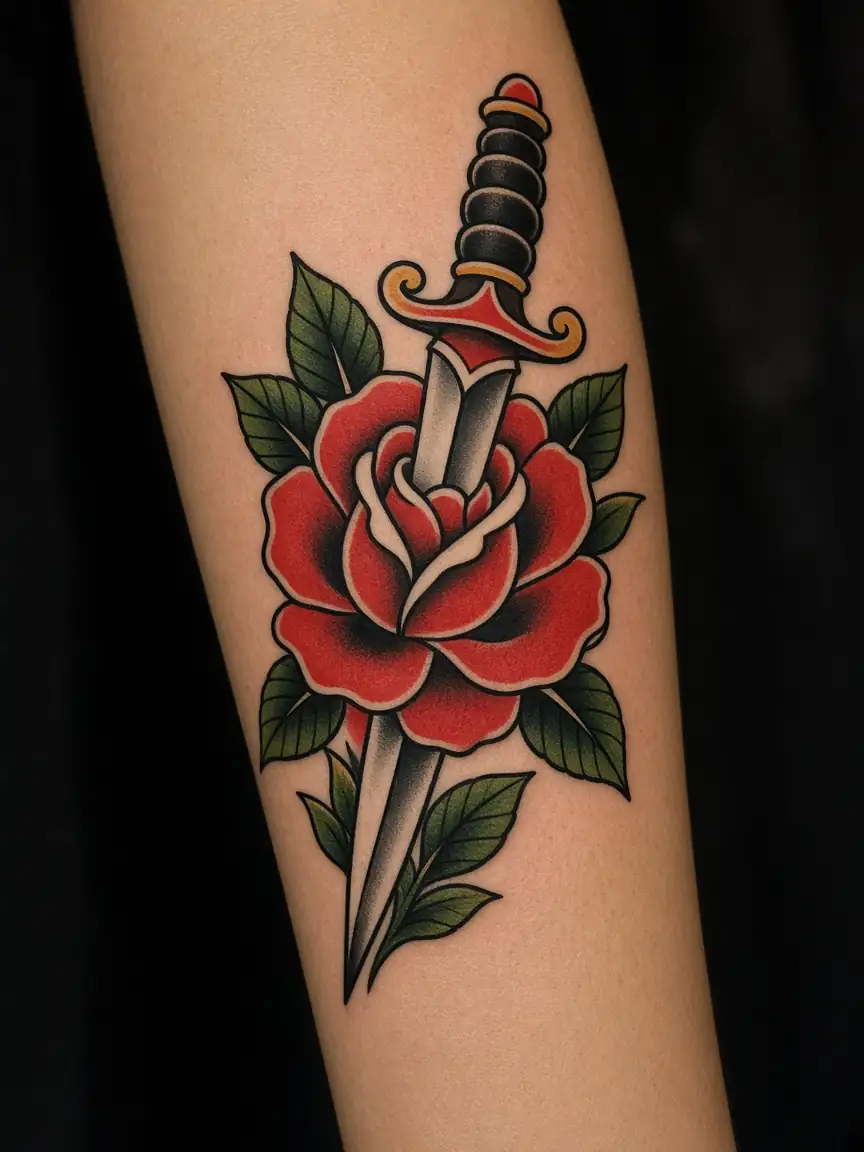
American traditional tattoos use heavy black outlines, a small set of colors, and classic subjects: roses, daggers, swallows, panthers, hearts, and banners with short words. The rules are the point. They keep the image readable after years of sun and skin.
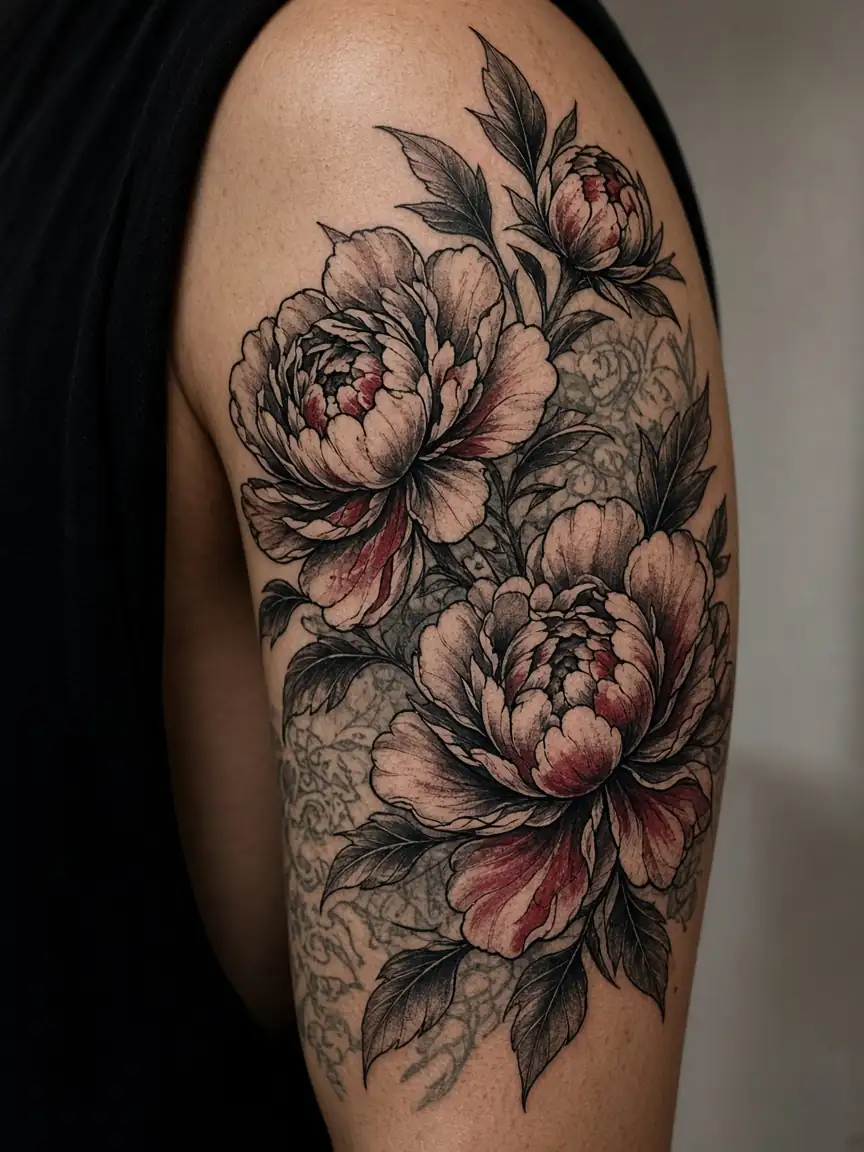
Neo-traditional keeps the bold outline and expands the drawing: more detail, a wider palette, a more illustrated flower or animal. It is still traditional in structure. It is not a soft watercolor piece and it is not Japanese traditional work.
Japanese-inspired tattoos and irezumi are not filed here, so this page does not compete with a different tradition. Those requests are raised on the custom tattoo page and may be declined. A classic rose can be traditional. A full Japanese sleeve is a different conversation.
Traditional designs
The studio draws within the tradition. It does not hand you a copied flash sheet from another shop.
American traditional subjects
Roses, daggers, birds, snakes, and other classic motifs redrawn for the placement.
Short banners
A word or a name in a banner, large enough to read. Paragraphs do not belong in traditional banners.
Neo-traditional florals and animals
More petals, more fur, a richer palette, still held by a confident outline.
Traditional gaps and clusters
Several smaller traditional tattoos planned so they can sit together later without a muddy collision.
Who traditional tattoos suit
This service suits someone who wants the tattoo to stay graphic, and who likes a limited palette more than a realistic one. It also suits a first tattoo when the person wants a proven structure rather than a fragile line.
It is the wrong page for a portrait, a micro symbol, or a request to remove the outline so the rose looks photographic. That last request is realism or black and grey, and it should be booked there.

Preparing for a traditional appointment
- Choose a subject you will still recognize if it is simplified.
- Ask for color or black only at the start. Changing that on the day rebuilds the drawing.
- Leave room around the tattoo if you think you will add traditional pieces later.
- Protect the skin from sun before the appointment.
- Expect a bold stencil. If the outline feels too heavy in the mirror, say so before the machine starts.
How traditional work is built
- Subject and rules
The motif is chosen and then edited to follow traditional structure: readable silhouette, limited detail.
- Color plan
A small palette is chosen. Extra colors are added only when they earn a place, especially in neo-traditional pieces.
- Outline, then color
The outline is tattooed solidly. Color and black shading follow, with the skin checked so it is not overworked.
- Long view
You are told how traditional color usually softens, and what sun protection is for after healing.
Traditional work in the portfolio
Traditional pieces on skin, including the rose and dagger, are collected in the traditional portfolio.
Look for a clean silhouette and an outline that closes. Those are the qualities this service is accountable for.
What changes the cost of a traditional tattoo
Bold does not mean a published flat rate. Size and color still change the hours.
Scale of the outline
A palm-sized dagger and a thigh-sized panther are different days of work.
Color count
American traditional palettes are limited on purpose. Neo-traditional color can take longer and is quoted that way.
Lettering in banners
Names and short words add drawing time and a spelling check.
Fitting older traditional work
Filling gaps next to existing traditional tattoos takes planning so the outlines do not fight.
Caring for bold color
Traditional tattoos often weep a little more because the outline and the color fields are solid. Wash gently, keep the moisturizer thin, and do not seal the tattoo under tight plastic overnight unless that was the instruction for your session.
Color fades faster in the sun than people expect. After healing, cover it or use sunscreen. The studio does not promise that reds and yellows will stay as bright as the fresh photo. Infection, allergy, or a reaction to aftercare products needs a doctor, not a forum remedy.
Questions about this service
A bold tattoo with a strong black outline, a limited color palette, and a readable classic subject. The structure is meant to stay clear as it ages.
It keeps the heavy outline and adds more illustration: extra detail, a broader palette, and a more designed floral or animal. It is not the same as Japanese traditional work.
No flash program or walk-in sheet is published. Traditional pieces are drawn for the appointment. If a set of shop designs is offered later, it will be shown as the studio’s own work.
Yes. Black traditional, with solid black and open skin, is a normal version of the style and can be chosen at the consultation.
Related tattoo services
Names, specializations, and biographies are published on the artists page only after the studio confirms them. Until then, a consultation is the way to match a project. This page does not invent a roster.
Choose a subject, not a screenshot
Tell the studio the motif, the size, and whether you want American traditional or neo-traditional. The drawing comes after the consultation, not before it is confirmed.