
Older ink, new plan
Cover-up tattoos in Phoenix
A redesign of an older tattoo, quoted only after the existing ink is seen. Not every tattoo can be covered, and a successful one is often larger and darker.
Tattoo work from the studio.
A cover-up is a design problem with a constraint
Cover-up work starts with the tattoo that is already there: how dark it is, how large, how raised, and what you want it to become. The new drawing has to be strong enough to hold the eye. That usually means more size, darker values, and a subject with its own shape, not a light wash placed on top of a heavy old line.
Some tattoos should not be covered. A very large, very dark piece may need laser lightening from a licensed medical or laser practice before a tattooist can do anything useful. This studio does not provide laser treatment and does not promise that ink can be hidden.
A touch-up is different. A touch-up reinforces a tattoo the studio or another artist already made, when the drawing is still the right drawing. It is not a disguise for a tattoo you want to stop seeing. Say which one you need. The quote and the drawing depend on it.
Cover-up and rework options
The old tattoo chooses the palette more than the mood board does.
Darker redesigns
Florals, traditional motifs, and black and grey compositions that can sit on top of older linework.
Partial reworks
Keeping a portion of the old tattoo and rebuilding around it, when the original still has something you want.
Touch-ups
Re-saturating or repairing a tattoo whose design should stay. Not every faded tattoo needs a new subject.
Scar-aware plans
Older scars are sometimes incorporated and sometimes left alone. This is not scar treatment, and recent or painful scars need a doctor’s advice before any tattoo is considered.
When to book a cover-up consult
Book this consult if you can show the tattoo in clear photos and you are willing to hear that the new piece must be bigger. Bring patience for a drawing that is about concealment as well as taste.
Do not book it if you need the old tattoo to vanish while the new one stays pale, tiny, or finely lined. Fine line is rarely the right tool for hiding dark ink. The consultation will say that directly.
Preparing for a cover-up consultation
- Photograph the old tattoo in daylight, straight on, without a filter.
- Include a second photo that shows the surrounding skin and the size.
- Write down what you dislike and what, if anything, you want to keep.
- Mention laser sessions, keloid history, or a scar through the tattoo.
- Do not book a full session date in your mind until the artist has seen whether a cover is plausible.
How a cover-up proceeds
- See the ink
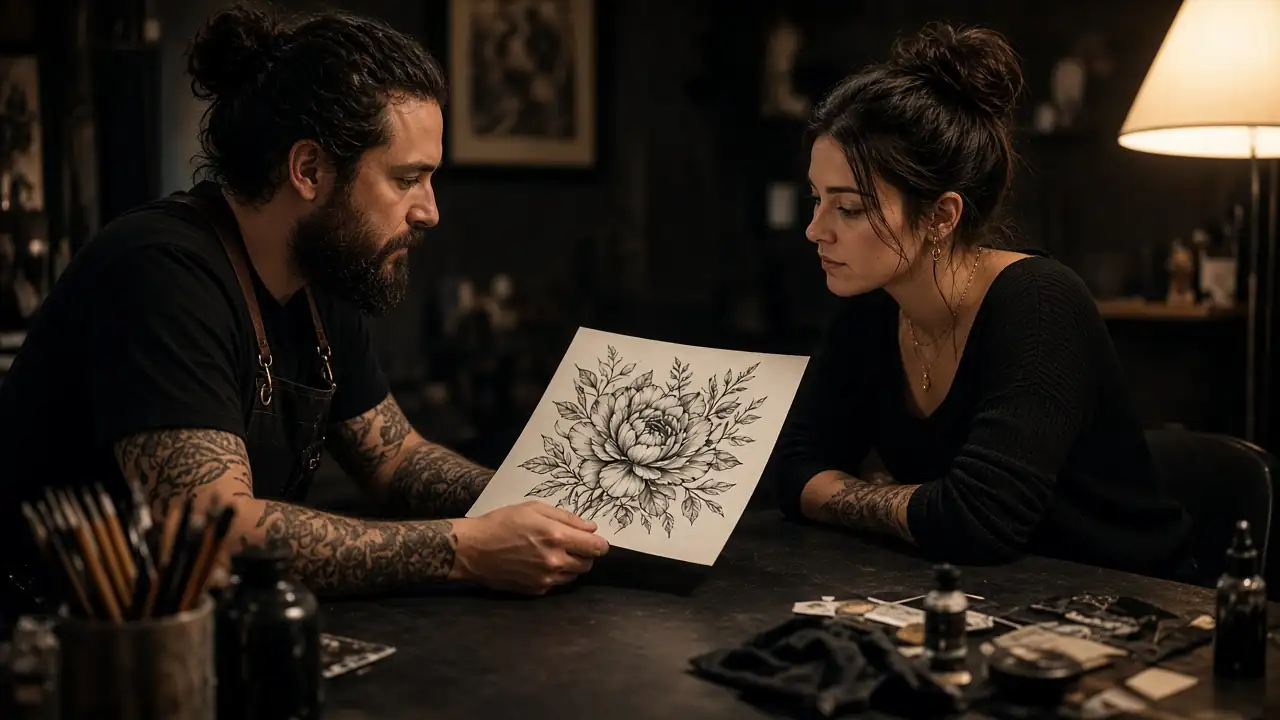
Photos start the conversation. An in-person look is required before a session is treated as realistic.
- Choose a structure
The new subject is picked because its dark shapes can distract from the old ones, not only because it is a favorite symbol.
- Draw larger
The drawing is shown at the size it actually needs. If that size is wrong for you, the project stops or changes.
- Tattoo in a sequence
Some cover-ups are one visit. Dark or large ones are staged. A second pass is part of the quote when it is expected.
What an honest example shows
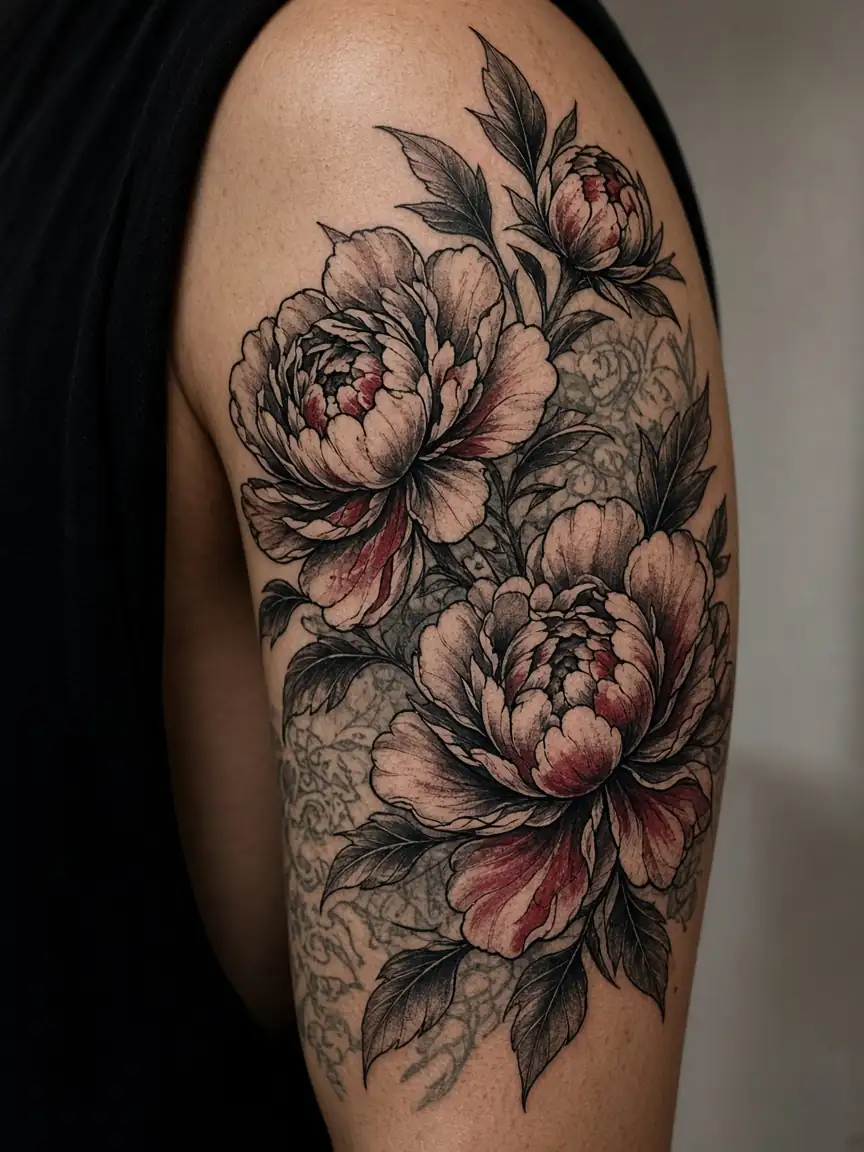
The floral piece on this page is a cover-up on skin. More of that work is in the cover-up filter. A client’s name is not published with the photograph.
A fair example includes the older tattoo, the drawing, and the healed result. A fresh, wet photo is not proof that the old lines stayed hidden.
What changes cover-up cost
Cover-up pricing depends on the tattoo being hidden. There is no per-inch chart on this site.
Darkness and size of the old tattoo
Heavier ink takes a heavier and usually larger replacement.
Number of sessions
Staged cover-ups cost more time than a single small rework.
Touch-up versus redesign
Reinforcing an existing tattoo is a different quote from designing a new image over it.
Laser history
Skin that has been lasered may need more time between sessions. The studio does not sell that laser work.
Healing a cover-up
Cover-ups can be more swollen because the skin is working over older ink. Follow the session’s written care, keep the area clean, and do not compare the first week with the drawing. Old lines can seem to reappear while the surface is opaque with peeling, then settle.
No cover-up is guaranteed to hide every trace. Some ghosting of old work can remain. Scars may take ink unevenly. The studio is not a medical provider and will not describe a tattoo as scar treatment or as a fix for self-injury. If you are unsure whether skin is ready to be tattooed, ask a physician first.
Questions about this service
No. Very dark, very large, or badly scarred tattoos may be poor candidates. Some need laser lightening elsewhere before a new tattoo is even worth drawing.
Often, yes. The new design usually needs to extend past the old one and to carry darker shapes. If you cannot accept more size, a cover may not be possible.
A touch-up repairs or refreshes a tattoo you still want. A cover-up replaces the role of a tattoo you do not want to see. They are quoted separately.
Sometimes ink can be placed near or over an older, stable scar, and sometimes it should not. That is not medical treatment, the result can be uneven, and a doctor should clear any scar you are worried about.
Related tattoo services
Names, specializations, and biographies are published on the artists page only after the studio confirms them. Until then, a consultation is the way to match a project. This page does not invent a roster.
Show the tattoo that is already there
Describe the existing tattoo and what you want changed. Do not upload photos yet. The form cannot accept files, and seeing the tattoo clearly will still be required before any session is planned.